
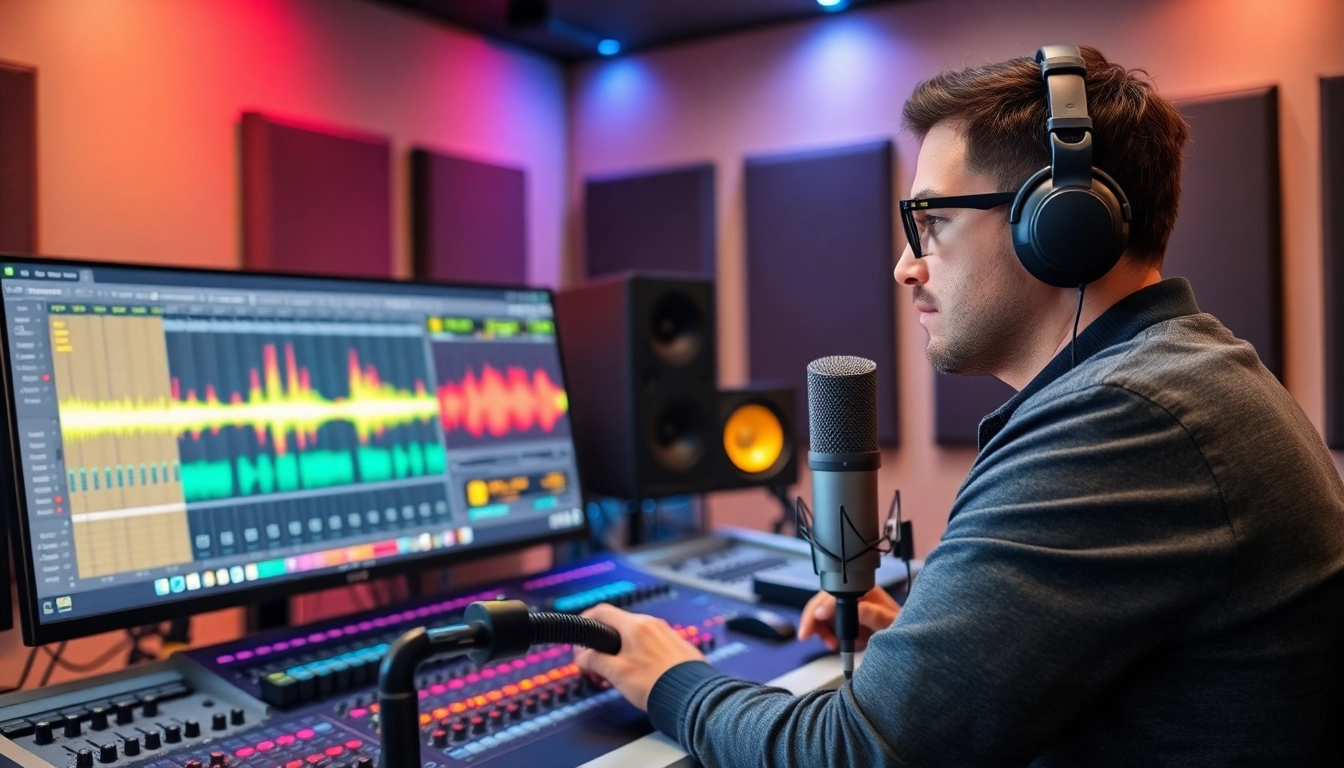
Understanding Online Audio Mastering
What is Online Audio Mastering?
Online audio mastering refers to the final step of audio production, accomplished remotely through digital platforms. This process typically involves enhancing the sound quality of a mixed audio track, making it ready for distribution across various platforms. Unlike traditional mastering, which requires physical studio space and equipment, online audio mastering allows artists and producers to upload their tracks to an online service, where highly skilled engineers process them using professional software and tools.
The Importance of Quality Mastering
Mastering serves as the polishing phase in audio production. It’s vital for ensuring that the music sounds cohesive and professional. Proper mastering will make tracks competitive in terms of loudness, tonal balance, and clarity. A well-mastered track translates better across various listening environments—from high-end speaker systems to earbuds—and reinforces the artist’s brand by projecting an image of quality and professionalism.
Key Elements of the Mastering Process
The mastering process incorporates various elements which include equalization (EQ), dynamic range compression, limiting, stereo enhancement, and reverb adjustments. Each of these elements plays a crucial role in shaping the audio’s final sound. EQ helps to fine-tune the tonal balance, while compression manages the dynamic range, ensuring that softer and louder parts are well-integrated. Limiting is used to maximize loudness without causing distortion, and stereo enhancement widens the soundstage to create a more immersive listening experience.
Essential Tools for Online Audio Mastering
Software Options for Mastering
Choosing the right software is imperative for effective mastering. There are several DAWs (Digital Audio Workstations) suited specifically for this purpose. Popular options include Adobe Audition, Logic Pro, and Cubase. Additionally, specialized mastering tools like iZotope Ozone provide comprehensive features for EQ, dynamics, and more within an intuitive interface. Many online mastering services leverage these powerful software solutions to deliver high-quality results accurately and consistently.
Hardware Recommendations
While software plays a significant role, hardware is equally important. Essential equipment includes high-quality studio monitors for accurate playback, an audio interface for sound input and output, and possibly analog gear like compressors and EQs for those who prefer hybrid mastering techniques. Even in an online context, understanding the hardware capabilities used by engineers can shed light on the potential quality of the final product.
Plugins to Enhance Your Mastering
Plugins are vital in achieving the desired sound profile. Investing in high-quality plugins for EQ, compression, and limiting can significantly enhance the mastering process. Tools such as FabFilter Pro-L for limiting, Waves SSL G-Master for analog warmth, and T-RackS for a comprehensive suite can help refine sound. Combining these plugins with the right settings can yield impressive results, giving your track that professional polish it needs.
Best Practices in Online Audio Mastering
Preparing Your Tracks for Mastering
The preparation stage can make a significant difference in the mastering end result. It is essential to export your mix with proper headroom (ideally around -6 dB) to allow for adjustments during mastering. Make sure your tracks are free from unnecessary effects and are as clean as possible, including de-essing and any essential processing. Clearly labeling track versions and providing detailed notes can help the mastering engineer understand your vision.
Common Mastering Techniques
Several common techniques can be employed in the mastering process. Starting with EQ adjustments can help sculpt the overall tonal balance, often focusing on cutting problematic frequencies while boosting others that enhance the mix. Next, applying a compressor can help achieve a uniform dynamic range, while limiters are used at the end of the chain to maximize loudness without distortion. Additionally, stereo imaging tools can widen the sound stage, creating a more dynamic experience for the listener.
Achieving a Balanced Sound
A balanced sound means that no single element overpowers the others. To achieve this, careful analysis of the mix is essential. Use reference tracks—songs that are similar in style and genre that have been professionally mastered—to compare levels, tonal characteristics, and dynamics. Make adjustments based on these comparisons to ensure that your track holds its own in competitive listening environments.
Common Challenges in Online Audio Mastering
Identifying Audio Issues
During the mastering process, identifying various audio issues is crucial. Common issues include muddiness, excessive harshness, and a lack of clarity. Listening critically, both at high and low volumes, can help uncover these issues. Additionally, using visualization tools such as spectrograms and peak meters can assist in pinpointing problem areas that may not be immediately apparent to the ear.
Dealing with Dynamic Range
Dynamic range management can be challenging when mastering tracks. While you want your track to have presence and loudness, over-compression can lead to a lifeless, flat sound. The key is to find a balance by employing gentle compression strategies and leaving some dynamic range intact. This approach ensures that the final master retains emotional impact and keeps listeners engaged.
Addressing Frequency Imbalances
Managing frequency imbalances is crucial for a professional-sounding master. Muddiness usually stems from low-end buildup, while harshness can arise from excessive high frequencies. Employing subtractive EQ techniques can be particularly effective; by cutting areas that are too prominent, you can pave the way for the midrange and other frequencies to pop, achieving a more balanced overall sound without sacrificing clarity.
Measuring Success in Online Audio Mastering
Quality Assessments and Standards
Assessing quality in online audio mastering relies on a few set standards. Loudness normalization standards like LUFS have become industry benchmarks, with many platforms requiring specific levels to ensure optimal playback. It’s also essential to analyze tonal balance and dynamic range using tools that provide numerical readings to determine how well your track matches these standards.
Playback Testing Across Platforms
Testing your mastered track across multiple platforms is crucial. Different streaming services, such as Spotify and Apple Music, may apply their own loudness normalization. Understanding how your track performs on various platforms provides insights into how it will be received by the audience. Always listen on different types of speakers and headphones to gauge performance across devices.
Gathering Feedback from Listeners
One of the best ways to assess your track’s success is to gather feedback from a diverse audience. Friends, fellow musicians, and even potential fans can provide valuable insights. Utilize their critiques to fine-tune your audio and to identify areas that resonate. Constructive feedback is invaluable; it can highlight strengths while also pointing out weaknesses you may not have noticed.
Frequently Asked Questions
What is the difference between mixing and mastering?
Mixing focuses on blending individual audio tracks while mastering involves preparing the final audio for distribution. Mastering adjusts overall volume, EQ, and dynamics post-mixing.
How long does online audio mastering take?
Online audio mastering can take anywhere from a few hours to several days, depending on the online service, the complexity of the track, and their current workload.
Is online audio mastering as good as studio mastering?
Quality in online audio mastering can match that of studio mastering, especially when using experienced engineers and professional tools. However, results vary by service.
Do I need to send a fully mixed track for mastering?
Emailing a fully mixed track is ideal, ideally with headroom to ensure the mastering engineer has adequate space to work. Clean mixes yield better results.
Can I make changes after mastering?
Typically, changes post-mastering can be complex. If significant adjustments are needed, it may require revisiting mixing, depending on the extent of changes.